News


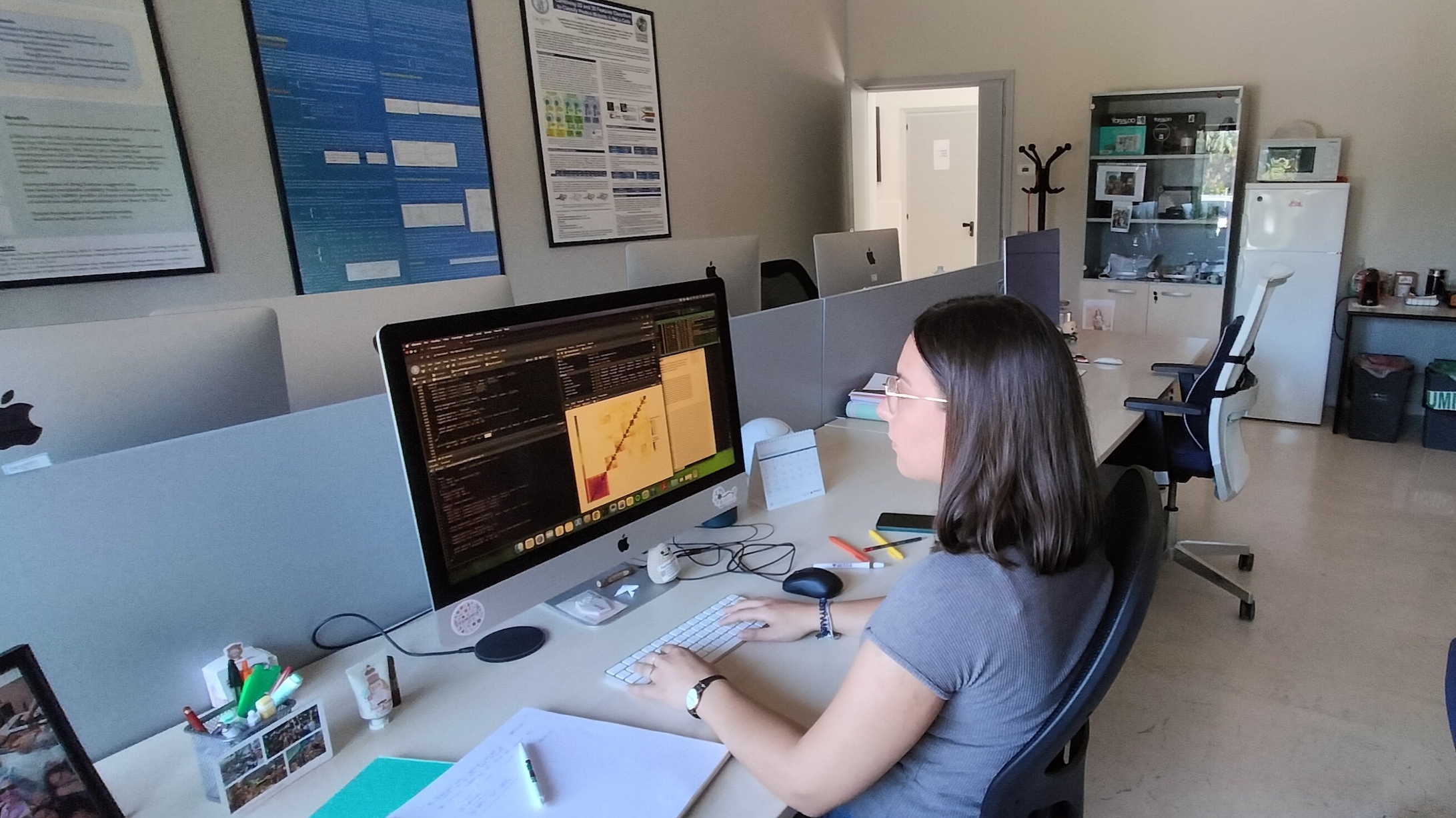
Dr. Francesca Pia Caruso, from Biogem Computational Biology Laboratory, directed by Prof. Michele Ceccarelli, is the principal investigator of a new cancer research project funded by AIRC, the Italian Association for Cancer Research, as part of the call "My First AIRC Grant" (MFAG). This type of call from AIRC provides essential support for young researchers to launch innovative projects. The selection process is rigorous and based on international evaluation standards.

The project to be developed at Biogem is titled ‘Elucidating Oncogenic Kinase Networks Shaping Immunosuppressive Microenvironment,’ and aims to identify new mechanisms and drug targets that can prevent resistance to immunotherapy treatments in oncology. Indeed, only a limited number of patients benefit from immunotherapy. Biogem research will focus on kinases, a family of enzymes that play a central role in several tumor characteristics, including proliferation, metastasis, and the ability to resist the body's immune response.

Methodologically, the research coordinated by Dr. Caruso includes in silico (i.e., computational) investigations to select new targets, generation of in vitro (i.e., cellular) models, and their validation in vivo (i.e., in mice models). The primary objective is to elucidate the mechanisms that determine the tumors' ability to evade immune defenses. Ultimately, this new Biogem research may lead to the identification of new therapeutic strategies in combination with immune-therapies to increase the positive response rates.

Also this year Biogem researchers are offering a series of lectures on different life science topics to students from various high schools. This new edition features an expanded number of participating schools. Following the success of previous years, the number of participating schools has expanded beyond the provincial and regional boundaries.

The series of 10 face-to-face lessons, scheduled between November 26 and December 5, 2025, will be held for students from the «Giuseppe De Gruttola» High School in Ariano Irpino, the «Pietro Paolo Parzanese» Classical-Scientific High School in Ariano Irpino, the Scientific High School in Bovino (FG), the «Epicarmo Corbino» Comprehensive Institute (Health Biotechnology path) in Contursi Terme (SA), and the Scientific High School «Ugo Foscolo» in Teano (CE).

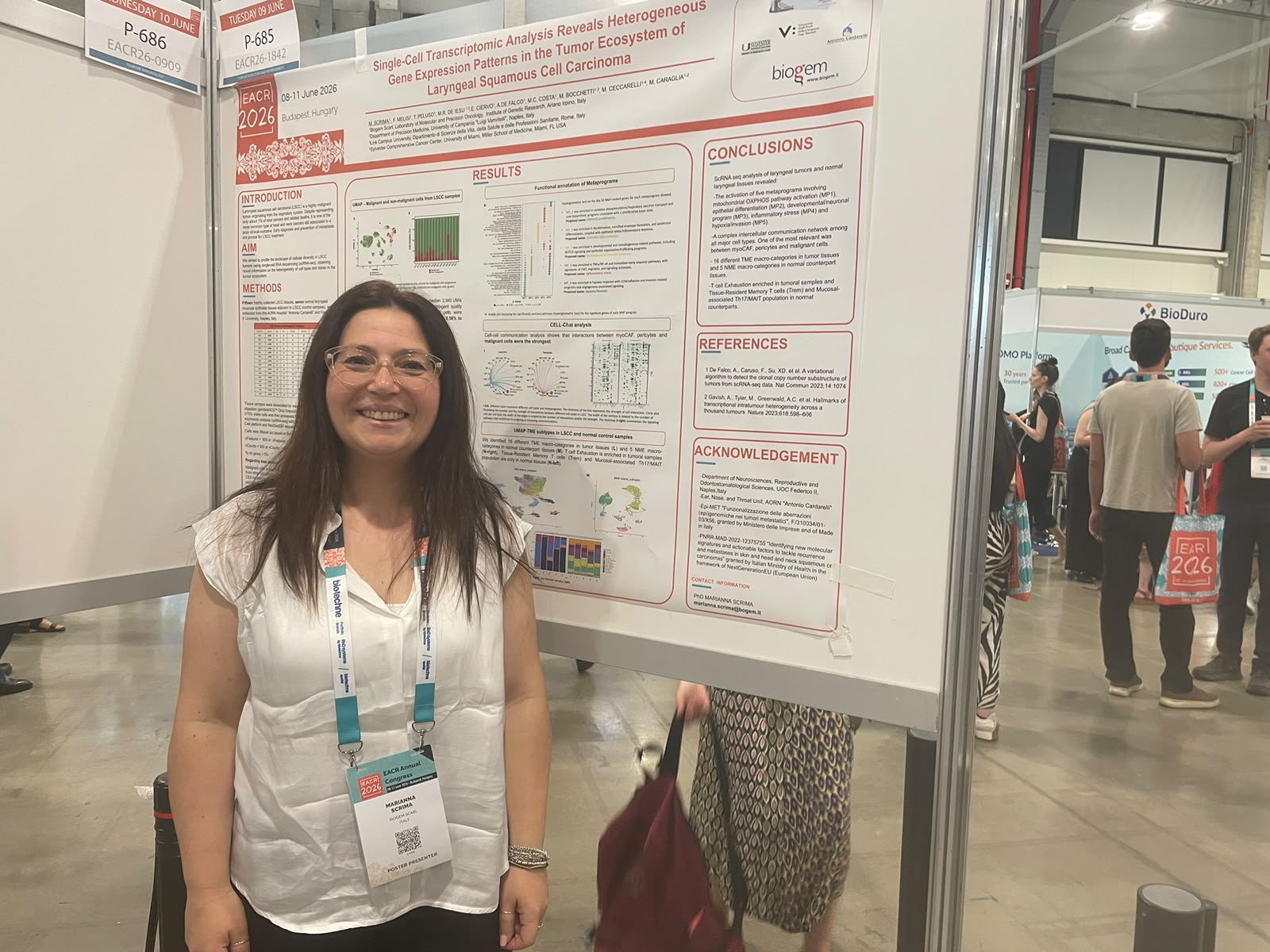
The lessons, part of the PCTO (Paths for Transversal Skills and Orientation), will be held in the ‘Emanuele’ conference room of the Ariano Irpino research institute and will cover a total of 15 hours. Coordinated by Dr. Olga Sampietro of the President's Office, 11 Biogem researchers will be involved: Dr. Marianna Scrima, from the Molecular Oncology and Precision Medicine Laboratory, will open the training program with a lecture on The human genome, followed on the same day by Dr. Francesco Cardile, head of Biogem's Animal Facility, who will discuss Animal experimentation and welfare. The lessons will continue the following day, Thursday, November 27, with Dr. Maria Roberta De Iesu, also from the Molecular Oncology and Precision Medicine Laboratory, who will discuss Next-generation sequencing and reading the genetic code, and Dr. Pellegrino Mazzone, from the Cellular Biology and Preclinical Oncology Laboratory, who will explore the topic of Cancer biology and pathophysiology. On Friday, November 28t, Dr. Nicola Russo and Dr. Luca Roberto, both from the Genetically Modified Animal and Cellular Models Laboratory, will speak on PCR and Cloning and Mouse Models and Human Pathologies, respectively. The following week, Thursday, December 4, new lessons with Dr. Nicola Rinaldo, from the Hematobiochemistry and Histopathology Laboratory, who will discuss the Phases of Drug Development, and with Dr. Teresa Peluso and Dr. Federica Melisi, from the Molecular Oncology and Precision Medicine Laboratory, who will focus on the topic of Scientific Research: From Bench to Bedside. The program will finish on Friday, December 5 with lectures by Dr. Luciano D’Apolito, from the Nephrology Laboratory, on Microscopy: Principles and Applications in Preclinical Research, and by Dr. Antonello Calcutta, head of Biogem's new Biobank, on Cryopreservation.

This intense and comprehensive program, made possible by the generous support of Biogem's administrative and scientific staff, allows the involved young students to experience firsthand the reality of scientific research laboratories. This is a remarkable opportunity, especially given that one of the unresolved limitations of Italian schools is the lack of possibilities to combine theory and practice, education and the professional world. Biogem remains at the forefront of providing support to young students in the region, who are faced with important decisions for their educational and professional development.

The article, having as first author the Biogem's scientific director, Giovambattista Capasso, is about the mechanisms underlying cognitive decline in chronic kidney disease, and confirms the final confirm, at the highest international scientific level, of a line of study focused on the multiple interrelationships between the kidney and the brain. «This line of research - explains Professor Capasso - is the basis of the international CONNECT 2020-2024 project, coordinated by Biogem, with the aim of studying the mechanisms connecting renal and neurological function.» «In 2010 - explains Capasso - it was understood for the first time that the decline in cognitive ability, typical of many patients with chronic kidney disease, tended to progress to Alzheimer's disease in those undergoing dialysis. Also for this reason, when I was a member of the board of directors of the European Society of Nephrology—recalls Biogem's scientific director—I was intrigued by the prospect of studying the processes through which the kidney influences the brain's cognitive capacity. The CONNECT project ('Cognitive decline in nephro-neurology: European Cooperative Target') was approved a few years later, in October 2020, and brought together over 200 scholars from 28 European countries, as well as some from outside Europe, including the USA and Iran. In particular, basic and clinical researchers were involved, as part of a multidisciplinary program funded by Horizon 2020, under the patronage of the European Society of Nephrology.» «I was elected coordinator - reveals Capasso - with Biogem and the Vanvitelli University as key players in the initiative, and, over the course of five years, we confirmed the important role of the kidney in cerebral cognitive decline, also identifying many of the mechanisms and factors specifically involved.» «All of this - Capasso continues - has been the subject of several scientific conferences and over forty publications in leading journals, as well as roundtable discussions at European nephrology, geriatrics, and neurology conferences. Specifically, we organized the first international conference entirely dedicated to kidney-brain interactions in Naples, and, at the end of this long journey, we received an invitation from the prestigious journal Nature Reviews of Nephrology to write a review.» «Once the work was published - Professor Capasso reveals - we discovered, to our great satisfaction, that the cover of the journal was dedicated to our project, but for us it was only a starting point. In the two-year period 2024-2025, we have in fact obtained two substantial grants on this topic: the first, at the regional level, with Biogem, the promoting institute, aimed at identifying neurotoxic uremic toxins and their measurement using a technology that is accessible to all laboratories; the second, within the Horizon Europe framework, is led by Biogem and will allow us to follow, for the next three years, a group of patients with chronic kidney disease, subjecting them to tests capable of assessing the degree of cognitive decline, as well as functional magnetic resonance imaging, crucial for identifying the affected brain areas.» «The first objective - Capasso explains - is to record the possible progression of brain decline over time; the second is to understand whether cognitive decline can be mitigated through moderate physical exercise, consisting of a simple daily walk, monitored using a smartphone app. The international study will end in June 2028 and will be accompanied by similar research initiated by other members of the Connect Group around the world.»

«The studies reported on the cover of Nature - finally underlines Professor Capasso - also focus on the genetic and molecular mechanisms of cognitive decline, ensuring an increasingly relevant scientific approach to what can be considered one of the most advanced frontiers of modern medicine».

It is Forma.Temp, a major Italian bilateral fund, meaning it is managed by joint bodies consisting of employers' associations and trade unions. Specifically, this fund was created to finance professional training and support workers' incomes, on a non-profit basis. This registration, commissioned by the Forma.Temp employment agencies, qualifies Biogem for the opportunity to plan and deliver professional training courses aimed at preparing for the workforce. «Our hope - emphasizes the UIIP-Biogem coordinator Andrea Di Maso - is to leverage our experience in training, placing issues related to the ICT Digital sector (SAP, Data Analyst, Web Analytics, etc.) at the center of the programs we will develop.» «Particular attention -  Di Maso confirms - will be paid to all topics related to soft skills, i.e., transversal skills, which have always been the cornerstone of the training programs provided by UIIP Biogem.»

Supplier Register

Login