News

Melanoma: researchers from Biogem contributed to discover one of the mechanisms that helps cancer evade treatment

Biogem researchers have played a leading role in a major international study, published in the prominent journal Science Advances. The article offers new insights into the mechanisms underlying therapy resistance in melanoma.

The research helps us understand why patients with the same type of cancer and receiving the same treatments can achieve very different outcomes. The study has identified one of the processes through which some tumor cells can change, evading the immune system and becoming resistant to treatments.

At the heart of the research is a protein called NFATC2, which appears to play a key role in this process. According to the results from the study, modifying this protein could make tumor cells more recognizable by the immune system and, therefore, more responsive to treatments.

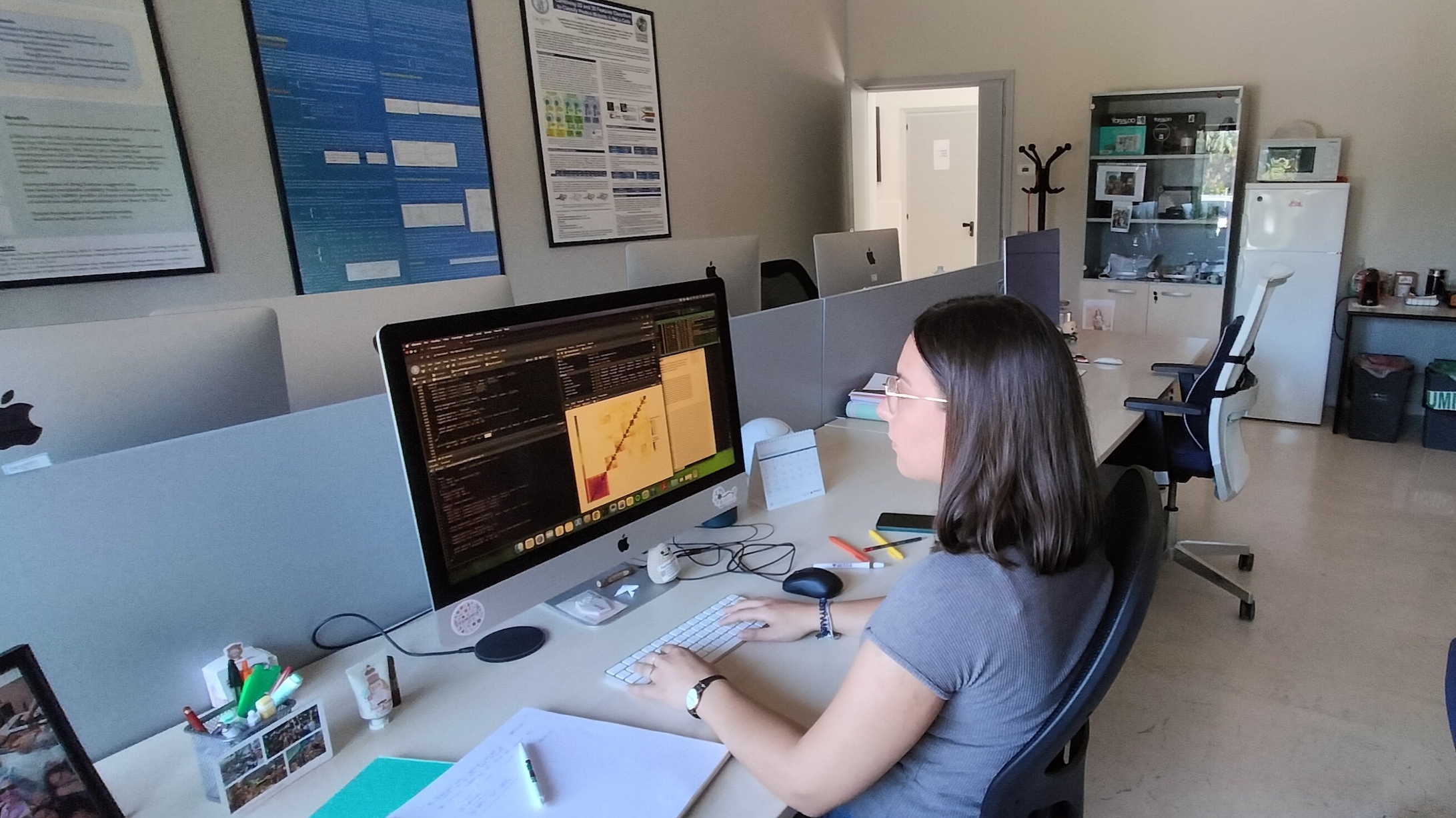
«In our work, we used biopsies collected as part of the NIBIT-M4 clinical trial,» explains Dr. Erika Ciervo, a researcher in Biogem's Computational Biology Laboratory, directed by Professor Michele Ceccarelli, and first author of the article. «Patients with metastatic melanoma were treated with a combination of an epigenetic drug, guadecitabine, and an immunotherapy drug, ipilimumab

Thanks to advanced technologies capable of analyzing individual cells and reconstructing the organization of tumor tissue, researchers were able to monitor how the tumor changes over the course of therapy. It emerged that, in patients who respond to treatment, tumor cells become more easily recognized by the immune system, facilitating the activation of the body's defenses. Conversely, in patients resistant to therapy, some cells retain characteristics that allow them to adapt and evade immune attack.

"This approach allowed us to follow the evolution of tumor cells during therapy and understand how their changes and their organization within the tumor can contribute to response or resistance to treatments," concludes Ciervo.

This study perfectly aligns with the translational research developed by Biogem, a molecular biology and genetics research institute based in Ariano Irpino (AV), Italy, particularly active in the areas of oncology and nephrology. Specifically, the results presented in this article open new perspectives for the development of more effective and personalized therapeutic strategies, identifying potential new targets for therapy resistance in some mechanisms involved in tumor cell plasticity.

For more information: https://www.science.org/doi/10.1126/sciadv.aed1318?url_ver=Z39.88-2003&rfr_id=ori:rid:crossref.org&rfr_dat=cr_pub%20%200pubmed
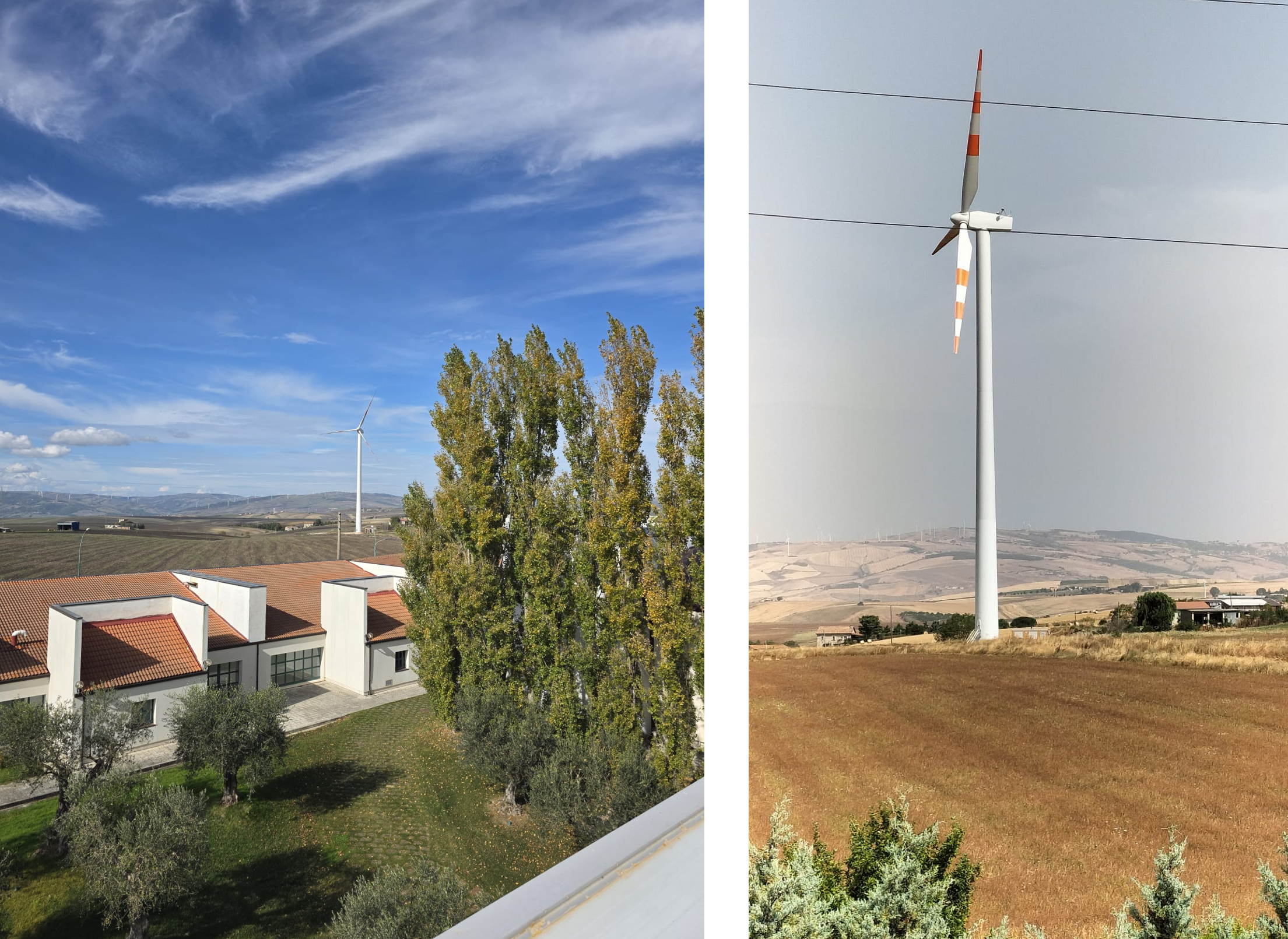

 

Biogem keeps investing for protecting the environment

In addition to biomedical research, Biogem has been committed for several years to minimizing the environmental impact of its activities. Since its opening in 2006, the institute has invested in improving the surrounding environment. Located in a former desert area, Biogem has planted 2,000 trees, a 600-seed olive grove, it has transplanted 400 centuries-old olive trees, and it has realized a 2,000-square-meter botanical garden on its grounds and in the surrounding area.

At the same time, energy efficiency programs have been launched and wind and photovoltaic systems have been built, generating tangible environmental benefits. In fact, 1,469 tons of CO2 have been avoided annually, corresponding to the annual pollution of approximately 1,000 cars. Furthermore, since 2015, Biogem is "Energy Positive," producing more energy than it consumes and preventing more carbon dioxide from entering the environment than it produces, with a net annual CO2 balance of 609 tons.

In addition to the investments that have made these results possible, Biogem has installed a new 800 kW wind turbine near its headquarters in Ariano Irpino, with a total height of 91 m and a rotor diameter of 52 m. This new investment further confirms Biogem's ecological awareness and its commitment to protecting the environment.

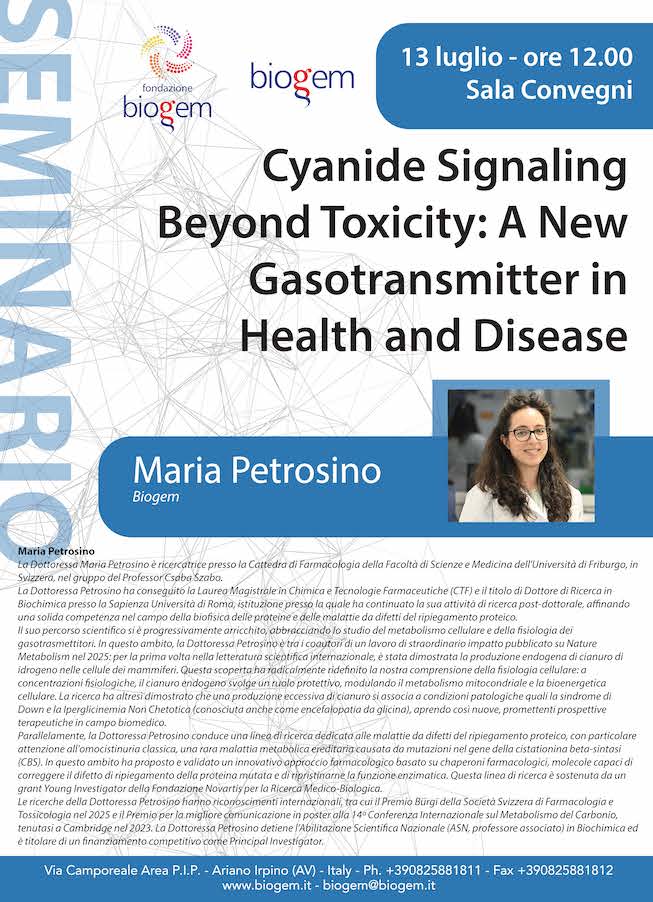
Dr. Maria Petrosino, researcher at the University of Fribourg, Switzerland, will have a seminar on "Cyanide Signaling Beyond Toxicity: A New Gasotransmitter in Health and Disease" on Monday, July 13, at 12:00 p.m. in the Aula Magna "Emmanuele F.M. Emanuele" at Biogem.

After a MA and PhD from Sapienza University of Rome, Dr. Petrosino specialized in the study of cellular metabolism and of the physiology of gasotransmitters. In this field, she collaborated in discovering the endogenous production of hydrogen cyanide in mammalian cells. This discovery radically redefined our understanding of cellular physiology: at physiological concentrations, endogenous cyanide plays a protective role, modulating mitochondrial metabolism and cellular bioenergetics. Research has also shown that excessive cyanide production is associated with pathological conditions such as Down syndrome and non-ketotic hyperglycinemia (also known as glycine encephalopathy), thus opening up new, promising therapeutic perspectives in the biomedical field.


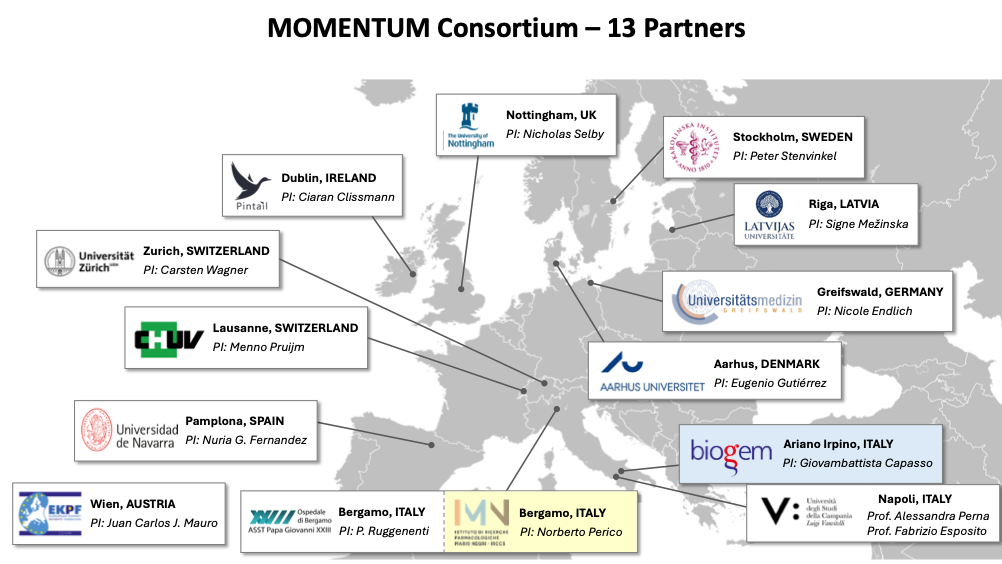
Biogem will play a prominent role at the kick-off meeting of the European project MOMENTUM at the Mario Negri Institute for Pharmacological Research on June 22nd and 23rd in Bergamo. A large group of representatives from the Institute, led by its President Ortensio Zecchino and the Scientific Director Giovambattista Capasso, will attend the meeting.

Funded by the European Commission under the Horizon Europe program (HORIZON-HLTH-2025-01-DISEASE-07 call), MOMENTUM aims to better understand the causes of mild cognitive impairment (e.g., memory and concentration impairment) that can occur in people with chronic kidney disease. Particular attention will be paid to the role of so-called uremic toxins, substances that accumulate in the body when the kidneys are no longer able to perform their proper function.

The goal is to identify increasingly effective tools for early detection of signs of cognitive decline and promote timely interventions, with tangible benefits for patients, healthcare professionals, and the entire healthcare system.

Biogem plays a central role in the project, coordinating the activities of 13 partners from various European countries. The Italian institute will also be directly involved in research activities, both experimental and in the clinical study involving people with chronic kidney disease.

The Bergamo meeting is the starting point of a collaboration that will develop over the next four years. Researchers, physicians, and specialists will work together to clarify how uremic toxins contribute to the decline of cognitive function and to identify new biological markers useful for early diagnosis.

To achieve these goals, the project will adopt an integrated approach that will link observations collected on patients with experimental studies conducted in the laboratory, particularly on mouse and zebrafish models. This will allow for a better understanding of the biological mechanisms underlying the disease and to more rapidly translate research findings into potential clinical applications. The knowledge generated by the project will contribute to improving patients' quality of life and preventing the progression of early forms of cognitive impairment to more serious conditions, such as dementia.

The kick-off meeting in Bergamo will be the first opportunity for discussion among all the consortium partners and will serve to define the work program, shared activities, and coordination methods that will guide the project for its entire duration.

Supplier Register

Login