An international team of researchers has identified a new biological mechanism that could contribute to the development of more effective therapies against acute myeloid leukemia (AML), an aggressive form of blood cancer.
The study includes as key contributors Professor Lucia Altucci and Professor Vincenzo Carafa, respectively head and co-head of the Medical Epigenetics Laboratory at Biogem, along with Professor Carmela Dell'Aversana of LUM University. The results were published in Cell Death & Disease.
The research identified a new epigenetic regulation mechanism, namely a new way in which tumor cells regulate a gene called BCLAF1. Specifically, this gene can produce two different versions: one, called the full-length isomorph, which promotes tumor growth, and one, called the short-length isomorph, which helps block it. Understanding how this process is controlled is crucial to developing new treatments.
Scientists have also discovered a regulatory system involving specific proteins and cellular mechanisms capable of influencing gene behavior through modifications to the DNA structure. This system appears to play a key role in the development of acute myeloid leukemia.
A particularly promising result involves the use of drugs already under investigation, known as "epidrugs," which could restore the balance between the two versions of the gene. This approach paves the way for new, more targeted therapies, with the potential to fight the disease more effectively.
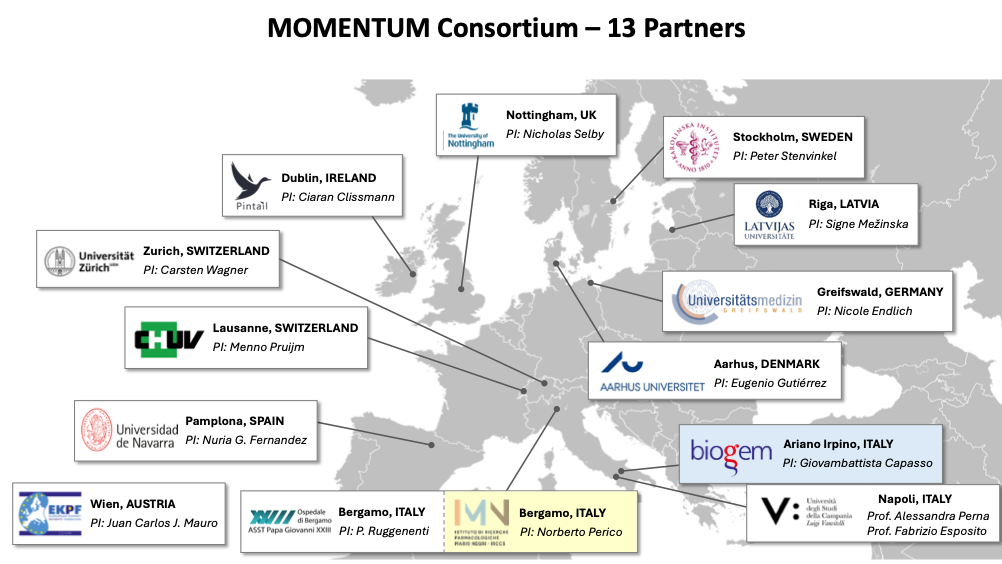
The study is the result of an international collaboration involving several research institutions in Europe: in addition to Biogem, the Vanvitelli University of Naples, LUM University, VUMC of Amsterdam, Lund University, Roma Tre University, Sapienza University of Rome, the University of Salerno, AORN Cardarelli, and IEOMI-CNR.
This discovery is an important step toward a better understanding of acute myeloid leukemia and offers new hope for the development of innovative treatments in the future.
For more information: https://www.nature.com/articles/s41419-026-08594-4