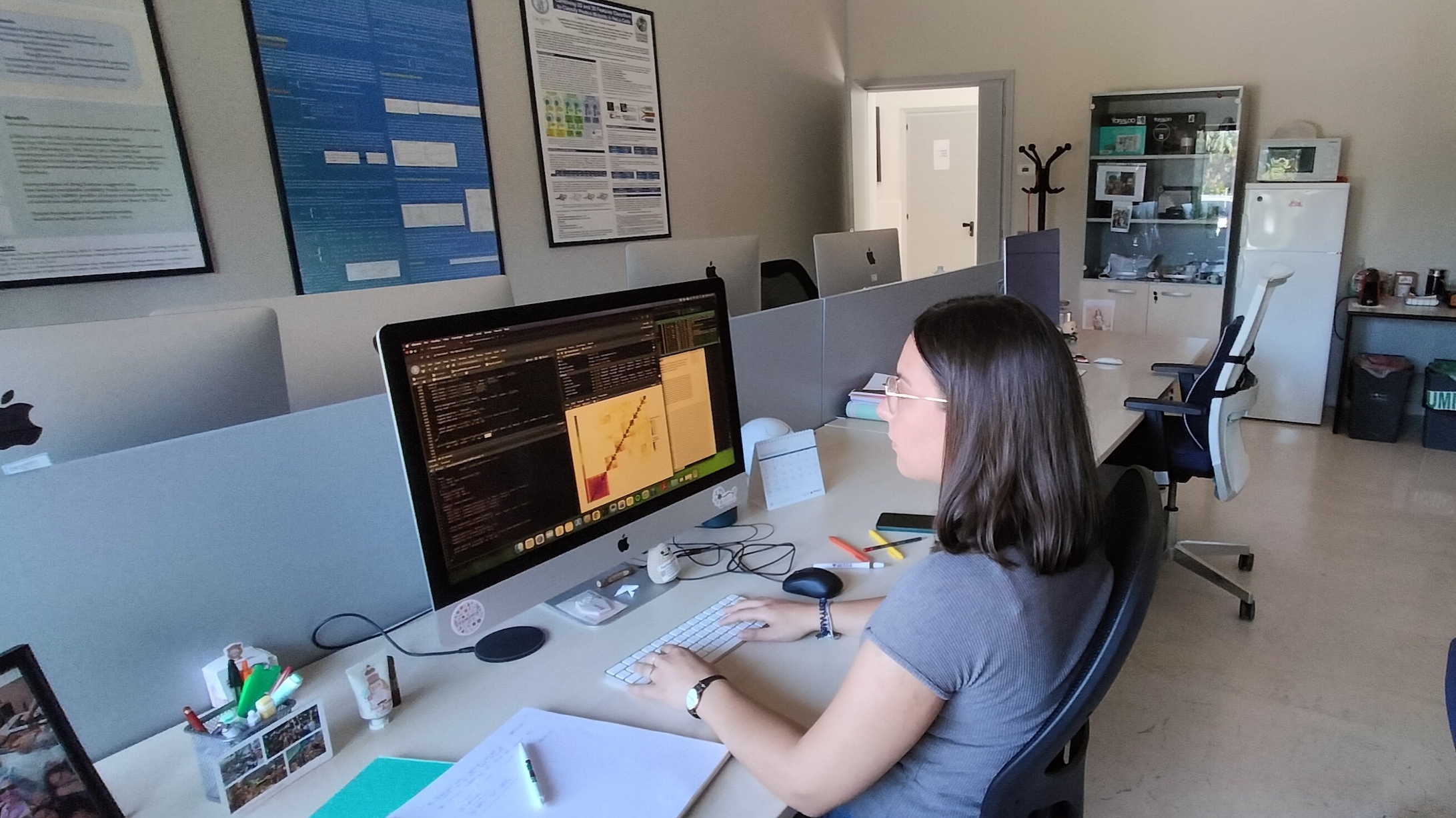
Four more young researchers who conducted their experiments at Biogem, specifically in the Translational Nephrology laboratory, successfully defended their doctoral theses.
Along with oncology, the study of the molecular mechanisms of kidney disease is a cornerstone of Biogem's biomedical research. The nephrology area, directed by Professor Francesco Trepiccione, is structured into several specific research lines: rare diseases, directed by Dr. Anna Iervolino; molecular and cellular renal physiology, directed by Dr. Yoko Suzumoto; and the kidney-brain relationship, directed by Professor Giovambattista Capasso, scientific director of Biogem.
On Wednesday, January 28, Ananya De, Antonella Iannaccone, Antonio Miele, and Antonio Villanova defended their doctoral theses in Medical, Clinical, and Experimental Sciences at the Luigi Vanvitelli University of Campania. The thesis of Dr. De, a young researcher from India, is titled ‘Kidney-Brain Axis in Early CKD in a Mouse Model: Behavioral and Molecular Insights,’ where CKD stands for ‘chronic kidney disease.’ This is increasingly recognized as a systemic disorder that goes beyond renal dysfunction, contributing to the development of cognitive deficits, the mechanisms of which remain largely unknown. Biogem has been engaged internationally in this line of research for several years, having significantly helped to introduce and develop it. Dr. De's research has identified a pre-symptomatic phase of cognitive decline associated with CKD. These results are very promising from a clinical perspective, as they allow the definition of preventive interventions and early treatment of cognitive decline associated with chronic kidney disease.
Dr. Iannaccone's thesis is titled ‘Differential Cytotoxic and Adaptive Responses to Polycyclic Aromatic Hydrocarbons in Renal Cells: The Protective Role of Oleuropein from Olea europaea.’ This research analyzes the role of the olive tree (Olea europaea) as an indicator of environmental quality and a potential source of natural substances with cell-protective effects in areas exposed to air pollution from toxic substances called polycyclic aromatic hydrocarbons (PAHs), typical of combustion processes. Laboratory experiments conducted on human kidney cells indicate that exposure to these substances can progressively damage cells, depending on the dose and duration of contact. Dr. Iannaccone's research has shown that oleuropein, a natural compound typical of the olive tree, significantly reduces the cellular damage caused by pollutants, helping cells maintain their vitality. Thus, the olive tree emerges as a true ‘ecological sentinel,’ capable of signaling the presence of pollutants while simultaneously providing substances useful for cellular defense.
Dr. Miele's thesis is titled ‘Gene therapy with Adeno-Associated Viruses as a novel therapeutic approach for the treatment of rare genetic kidney diseases.’ Gene therapy is one of the most promising frontiers of modern medicine for the treatment of rare genetic diseases. However, there is still no definitive cure for Fanconi-Bickel syndrome. This rare disease affects the kidneys and is caused by alterations in a gene called Slc2a2, which is essential for the proper functioning of renal proximal tubule cells.
One of the main obstacles to developing an effective therapy is delivering the correct gene precisely to the target tissue, avoiding unwanted effects in other organs. Adeno-associated viral vectors, already widely used in gene therapy, are considered safe and effective, but selectively targeting them to the kidney remains a challenge. Dr. Miele tested a new delivery method, retroureteral injection, which allows direct delivery to the kidney. He evaluated the use of two specific vectors, demonstrating that one in particular has greater specificity for the cells of the proximal tubule of the kidney. These preliminary results lay the foundation for a potential new targeted gene therapy approach for Fanconi-Bickel syndrome and other rare genetic diseases.
Dr. Villanova's thesis is titled ‘Beyond ciliary dysfunction: BBS10 as a master regulator of mitochondrial quality control and metabolic resilience in Bardet–Biedl syndrome.’ This research explored the role of BBS10, a protein involved in Bardet-Biedl syndrome, a rare genetic disorder that can affect multiple organs, including the kidneys. To study its function, dr. Villanova used a cellular model in which the BBS10 gene was inactivated, allowing direct observation of the consequences of its absence in renal cells.
The results showed that the loss of BBS10 significantly compromises the functioning of mitochondria, the cells' ‘powerhouses.’ To adapt to this stressful condition, cells activate metabolic compensation mechanisms, altering the way they produce energy, with negative effects on the stability of renal cells. Taken together, these data identify BBS10 as a central regulator of energy balance and renal cell health, offering a new understanding of the mechanisms leading to kidney damage in Bardet-Biedl syndrome. Dr. Villanova's research opens the possibility of evaluating whether targeted pharmacological interventions can help restore cellular energy balance and improve mitochondrial function, laying the foundation for new therapeutic strategies for kidney disease associated with Bardet-Biedl syndrome.
These results, achieved by young talents trained in recent years by Biogem, demonstrate the quality of the institute's increasingly translational biomedical research.